
What makes a trading alert actually useful
A ping that says ‘alert triggered’ is almost worthless. A genuinely useful alert carries context. Here’s what separates the two.
Most alerts are useless, and they’re useless in the same way. Your phone buzzes. You pick it up. It says “alert triggered.” Triggered on what? Which symbol? At what price? Is this the thing you’ve been waiting all week for, or the same noisy condition that fired four times yesterday? You don’t know, so you open the app, load the chart, and reconstruct the whole situation from scratch. By the time you understand it, the moment’s often gone.
An alert that makes you go to the chart to find out what it means has done almost nothing for you. It moved the work, it didn’t remove it.
A useful alert answers the questions you’d ask anyway
When something pings me, the first things I want to know are always the same. What happened. Where. And does it actually matter right now. A good alert answers all three before I’ve had to think.
What happened: not “condition met” but the actual event. “Price reclaimed the session high on rising volume.” Where: the symbol and the price, plainly, so I know if it’s the setup I care about. And does it matter: the context that tells me whether this is the real one or just the alert being chatty. A signal that fires constantly trains you to ignore it, which is worse than no alert at all, because now you’ve got a notification you’ve taught yourself to swipe away.
The picture is most of the value
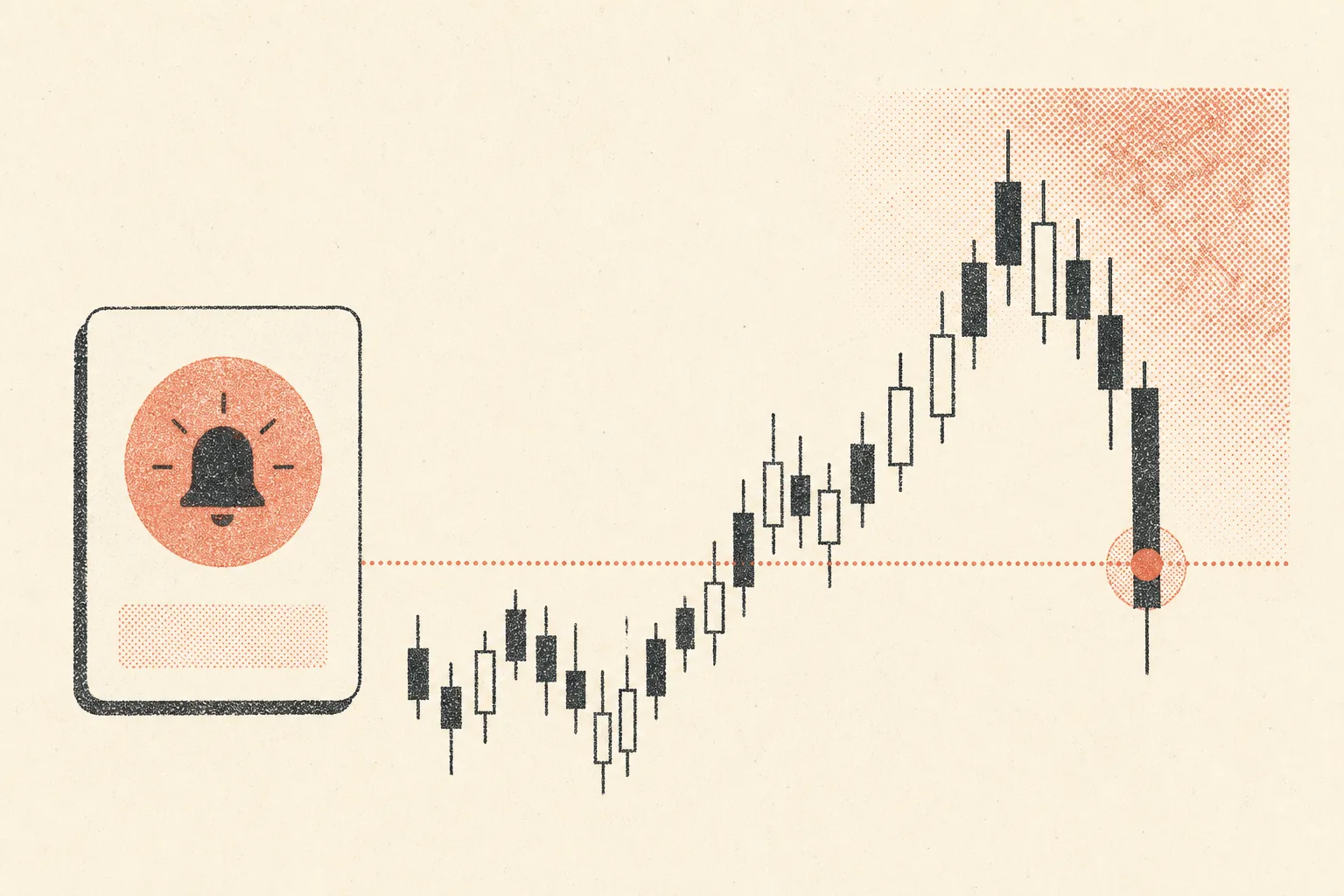
The single biggest upgrade is sending the chart with the alert. A snapshot of the actual candles at the moment it fired. The difference is night and day. With text, you read a description and rebuild the picture in your head. With the image, you glance and you know. Is this clean or messy? Is it at the level you wanted or fifty points away? Does the overall shape look like the setup or like a coincidence that happened to satisfy the rule? Your eye answers all of that in a second from a picture, and not at all from the words “alert triggered.”
Sound carries information too
A small thing that turns out to matter: different alerts should sound different. If every notification makes the same noise, you have to look to know what it was. Give the high-priority setup its own sound and you can be across the room and know, from the tone alone, whether to walk over or keep making coffee. The alert has told you something before you’ve even looked at the screen.
The test
Here’s the whole thing in one question. When the alert arrives, can you make a decision without opening the chart? If yes, it’s a real alert. If you still have to go and investigate, it’s just a reminder that something might be worth investigating, and you already had a market for that. It’s called looking at the screen.
The goal of a good alert is to let you not look at the screen, and trust that when it matters, you’ll be told properly. That’s the difference between a tool that frees your attention and one that just interrupts it.
The useful version
A useful alert is not “Buy now.” That is usually too little information at exactly the moment the trader needs context.
The alert should answer:
- What fired?
- On which symbol and timeframe?
- At what price?
- What invalidates it?
- Is it forming or confirmed?
- What should I check before acting?
A better payload
For webhook use, send structured data instead of a sentence:
{
  "symbol": "{{ticker}}",
  "timeframe": "{{interval}}",
  "setup": "NY open rejection",
  "state": "confirmed",
  "price": "{{close}}",
  "invalidBelow": "previous session low"
}
The exact fields can change. The principle does not: an alert should reduce decision friction, not create a mystery you have to solve while price is moving.